Long-term bridge monitoring
Bridges are inspected regularly. However, months or years may pass between two inspections. Long-term bridge monitoring adds another perspective to these periodic inspections: How does the structure actually behave in daily operation – and does this behaviour change over time?
The objective is not to generate as much measurement data as possible. The key is to derive comparable information from the measurements about the structural behaviour.
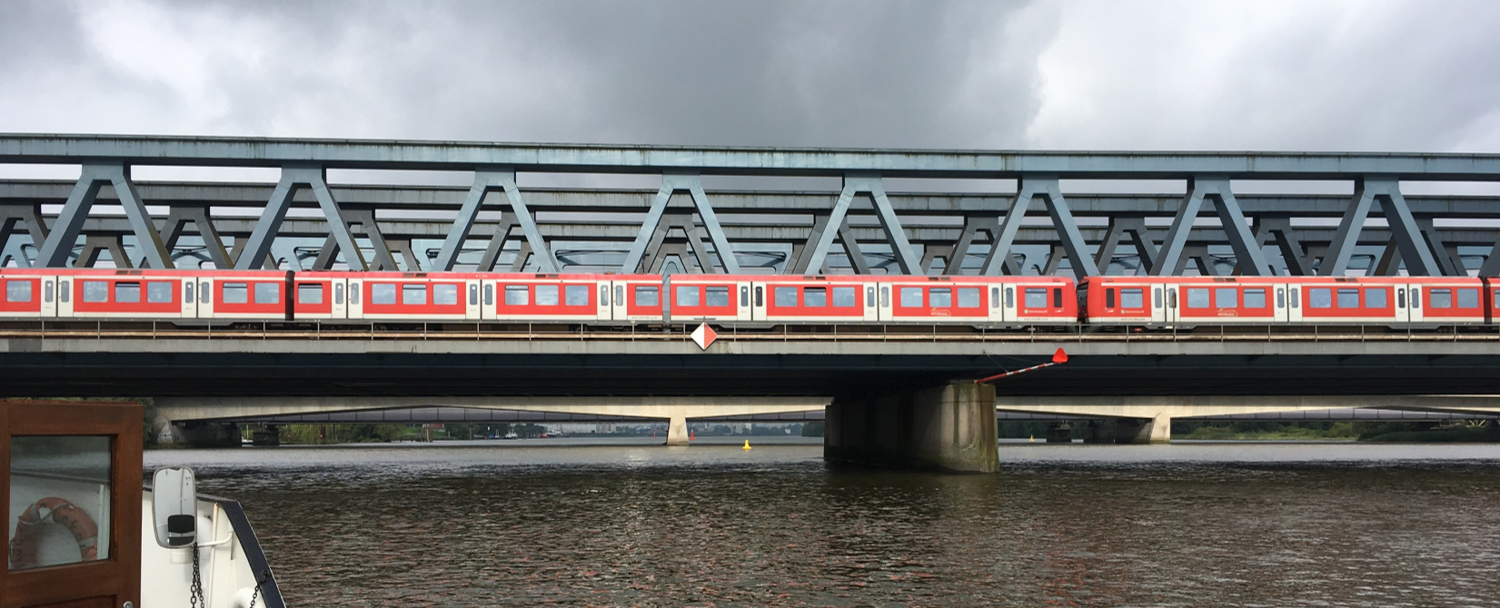
Long-term bridge monitoring under real traffic
With long-term monitoring, the bridge is continuously observed under the loads that actually occur. This includes normal traffic loads as well as heavy vehicles and special load situations.
Suitable measurement technology can capture deformations and movements at several points of the structure. The individual measured values form a characteristic movement or deformation pattern of the bridge.
This shows not only how much the bridge moves, but also how different areas of the structure behave in relation to each other.
Compare similar load situations
A single large deformation is initially just one measured value. For long-term assessment, it is much more relevant whether the structure behaves today under comparable loads in the same way as it did in the past.
For this purpose, passages of similar loads can be compared with each other. A typical deformation pattern for specific load situations emerges from a large number of events.
If this pattern changes systematically, this may indicate that the load behaviour has also changed. In this way, a continuous measurement becomes a long-term comparison of the structure with its own previous behaviour.
Observe zero position and recovery
In addition to behaviour under load, recovery after a load event is also relevant.
Does the structure return to its previous position after a vehicle has passed? Does a change remain? Does the long-term zero position shift?
Continuous observation makes it possible to distinguish such developments from short-term load behaviour. This is important because a change under load means something different from a permanent shift in the initial position.
Turn measurement data into operational information
Long-term monitoring quickly generates large volumes of data. For operators, however, individual measured values are only of limited use.
The actual task therefore begins after the measurement: acquiring data, identifying relevant events, creating comparable situations, analysing changes and presenting the results in an understandable form.
A good monitoring system should therefore not only provide measurement curves, but also show which behaviour is currently being observed, where long-term trends are developing and which areas of the structure require particular attention.
What monitoring does not replace
Long-term bridge monitoring does not replace bridge inspections or structural analysis.
It can complement these methods with information that is difficult to obtain from a periodic inspection: the actual behaviour of the structure over long periods of time and under real traffic.
The main benefit is not to make changes in behaviour visible as early as possible, but to document developments over longer periods in a traceable manner.
Not only determining how a bridge behaves on a particular day, but identifying whether it still behaves today as it did one year, three years or five years ago
Do you have questions about our measurement approach?
We would be pleased to discuss how your specific measurement task can be captured and evaluated using our laser-based measurement technology.